
IT audit
A clear, structured view of technology controls, infrastructure and areas that merit attention.
Related capabilities, with a clear scope for each
An IT audit creates a structured view of systems, infrastructure, operating practices, and technology controls. It helps decision-makers distinguish documented evidence from assumptions and see how technical observations relate to business priorities.
The review is shaped around agreed objectives and available evidence. Findings should explain the issue, its context, and its relative priority; recommendations should be practical enough to inform planning rather than simply produce a checklist.
Explore the capabilities
Open a capability to review its scope and the topics that can inform a requirements discussion.
Technology Environment Review
Build a structured view of the technology environment, its components, dependencies, and operational practices.
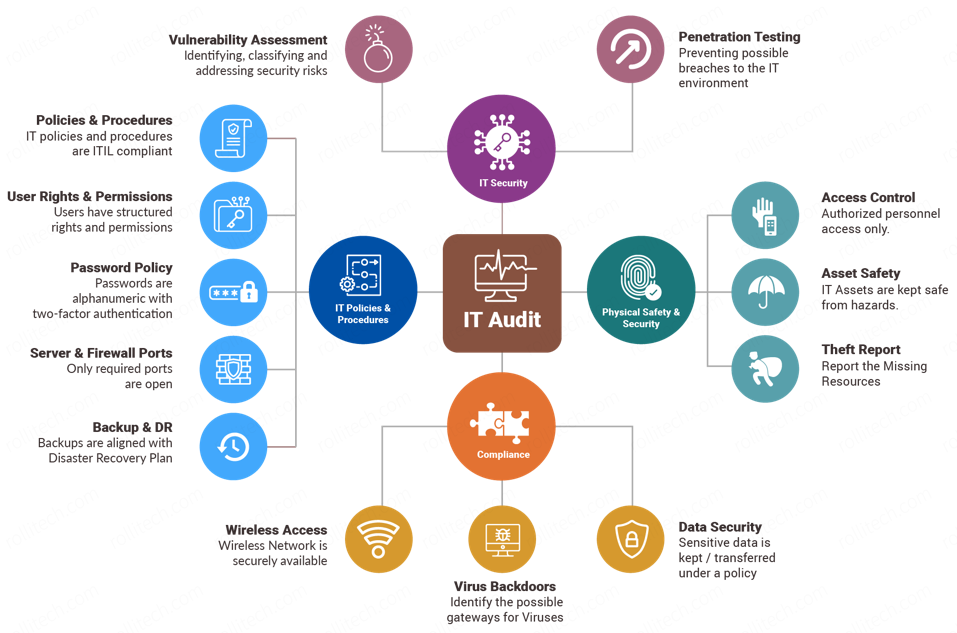
- Vulnerability assessment: identify, classify, and prioritize weaknesses.
- Penetration-testing scope: examine agreed attack paths and validate controls.
- Wireless access: review secure network availability for intended users.
Infrastructure & Control Assessment
Assess infrastructure design and technology controls to identify strengths, gaps, and areas for closer attention.
- IT policies and procedures, including alignment with ITIL practices.
- User rights, permissions, password policy, and two-factor authentication.
- Server and firewall ports: check that only required services are exposed.
Risk & Priority Observations
Translate audit observations into understandable risks and priorities that help guide next steps.
- Access control: review entry restrictions for authorized personnel.
- Asset safety and theft reporting: assess protection, records, and follow-up.
- Virus and backdoor exposure: identify potential malware entry points.
Practical IT Recommendations
Turn technology review findings into proportionate recommendations with clear ownership and actionable next steps.
- Backup and disaster recovery: align backup coverage with recovery plans.
- Data security: protect sensitive information in storage and transfer under policy.
Start with the need in front of you
If you are unsure which capability is the right fit, share your priorities and operating context to discuss an appropriate scope.